
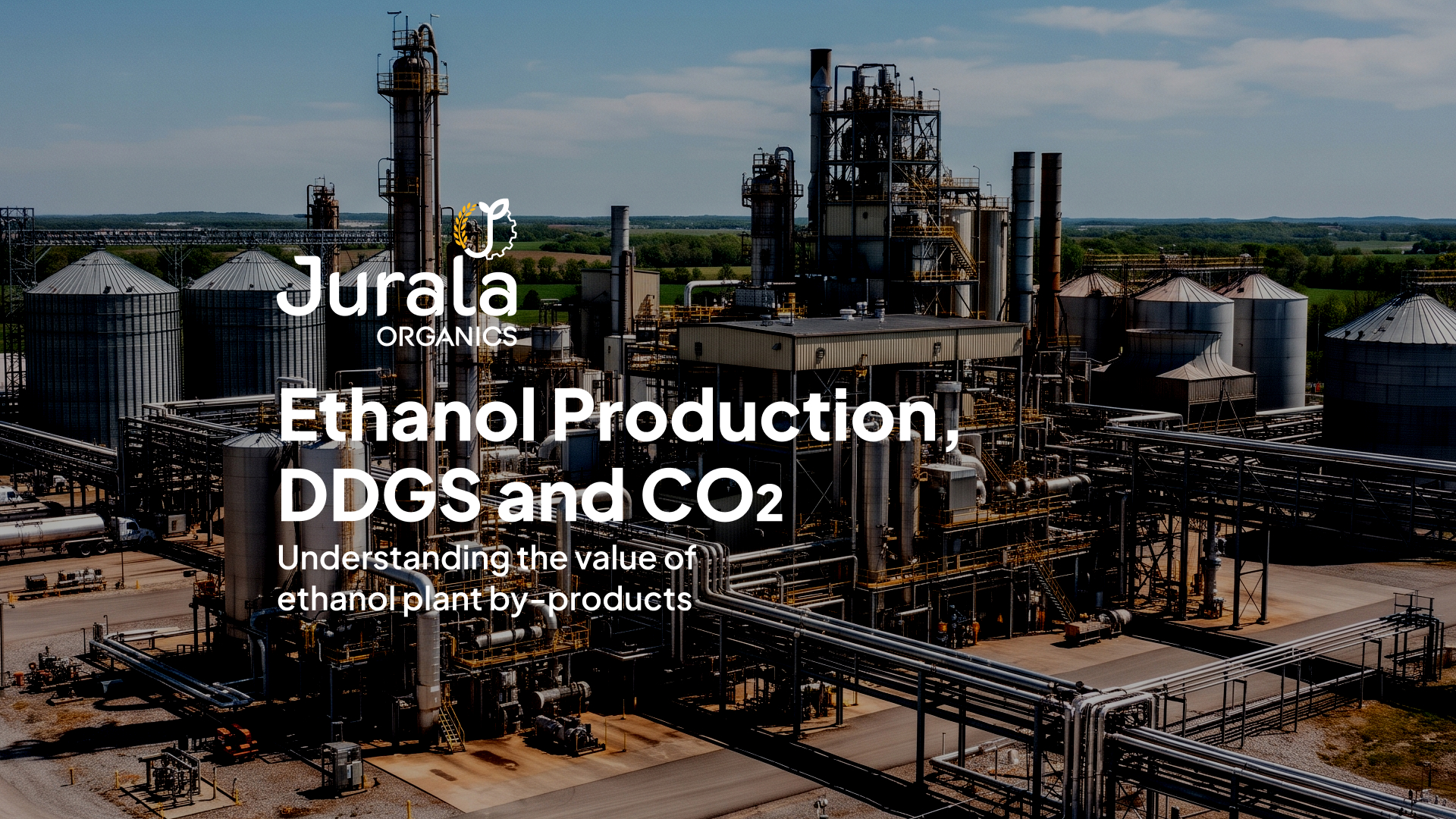
Ethanol production is an important part of the biofuel industry, helping convert agricultural raw materials into fuel and other useful products. However, the value of an ethanol plant extends beyond ethanol alone. The production process can also generate valuable co-products, including Distillers Dried Grains with Solubles (DDGS) and carbon dioxide (CO₂).
These co-products serve different industries. DDGS is used as an ingredient in animal feed, while recovered CO₂ can be supplied for suitable food, beverage, and industrial applications after appropriate purification and quality testing.
For businesses involved in biofuels, animal nutrition, food processing, and industrial gas supply, understanding these products can help identify new sourcing opportunities and improve resource utilization.
This guide explains the ethanol production process, how DDGS and CO₂ are produced, their applications, and the role of integrated production in creating value from agricultural resources.
Ethanol production is the process of converting suitable raw materials containing sugars or fermentable carbohydrates into ethyl alcohol. Fuel ethanol is widely used as a blending component in petrol, depending on the applicable fuel standards and vehicle requirements.
Common agricultural feedstocks include maize, broken rice, sugarcane, and other suitable starch- or sugar-rich materials. The choice of raw material depends on availability, processing technology, cost, and plant design.
In a typical grain-based ethanol plant, starch is converted into fermentable sugars. Yeast then ferments these sugars to produce ethanol and CO₂. The resulting mixture is processed through distillation and dehydration to obtain ethanol that meets the required product specifications.
The remaining material can be processed into co-products such as DDGS, depending on the plant configuration and recovery process.
According to the US Department of Energy’s Alternative Fuels Data Center, grain-based ethanol production can generate both distiller’s grains and carbon dioxide alongside ethanol.
The process varies by feedstock and plant design, but grain-based ethanol production generally involves these stages.
The process begins with suitable agricultural feedstocks, such as maize or rice. The raw material is cleaned and processed to prepare it for conversion.
For grain-based production, milling makes the starch available for later processing.
Grains contain starch, which must be broken down into fermentable sugars. Enzymes are commonly used to convert starch into simpler sugars that yeast can ferment.
This stage prepares the material for alcohol production.
Yeast converts the available sugars into ethanol and carbon dioxide under controlled conditions.
This is a key stage because the CO₂ released during fermentation can potentially be recovered rather than vented, provided the plant has suitable gas collection and purification systems.
After fermentation, the resulting mixture contains ethanol, water, and other substances. Distillation separates and concentrates the ethanol. Additional dehydration may be used to achieve the specifications required for fuel applications.
Following ethanol separation, the remaining grain material and process streams can be treated to recover useful co-products.
Two important examples are DDGS, used in animal feed formulations, and CO₂, which may be captured, purified, and supplied for suitable applications.
The exact products and quantities depend on the feedstock, processing technology, operating conditions, and recovery equipment.
DDGS stands for Distillers Dried Grains with Solubles. It is a co-product obtained during the processing of suitable grain-based ethanol streams.
After fermentation and distillation, the remaining material contains grain-derived components that were not converted into ethanol. This material can be separated into solids and liquid fractions. The solids are processed, and recovered soluble components may be concentrated and combined with them before drying.
DDGS can contain protein, fibre, fat, minerals and residual energy. Its nutritional composition varies with the raw material, processing method, and final product specifications.
Because of these characteristics, DDGS can be used as an ingredient in animal feed formulations. Its suitability and inclusion rate depend on the animal species, the overall ration, nutritional requirements and the quality of the supplied material.
For feed manufacturers and livestock businesses, important purchasing considerations include:
DDGS should be evaluated as one component of a balanced feed formulation rather than as a universal replacement for other feed ingredients.
Businesses looking for a DDGS supplier should request a current product specification and representative quality data before finalising a commercial order.
Carbon dioxide is naturally produced during the fermentation stage of many grain-based ethanol processes.
Instead of allowing all this gas to escape, an ethanol plant equipped with suitable recovery infrastructure can collect the fermentation CO₂ and process it for commercial use.
The process typically involves several stages:
The specific treatment process depends on the intended use. CO₂ for food and beverage applications must meet the applicable purity, safety, and regulatory requirements. Industrial applications may have different specifications.
Recovered CO₂ can provide a useful industrial input while creating an additional product stream for an ethanol plant.
Potential applications include beverage carbonation, food processing, selected industrial processes, and dry ice production. Dry ice is solid carbon dioxide used for cooling, temperature-controlled transport, and certain cleaning applications.
However, capturing CO₂ does not automatically eliminate its environmental impact. The overall benefit depends on the source of the carbon, the energy required for recovery and purification, transport, the end use, and what would otherwise have happened to the gas.
The value of ethanol co-products comes from their ability to serve industries beyond fuel production.
DDGS is used in animal nutrition, subject to feed formulation and quality requirements. Potential customers include:
Businesses should evaluate the product’s nutritional profile, digestibility, consistency and suitability for their target species before purchase.
Purified CO₂ can support several commercial applications:
CO₂ is an asphyxiation hazard at elevated concentrations, and dry ice can cause cold burns. Storage, ventilation, transport and handling must follow the relevant safety guidance.
An integrated ethanol plant can create several marketable products from a common agricultural feedstock.
Ethanol supplies the fuel market. DDGS can provide a useful ingredient for animal feed, while recovered CO₂ can supply suitable industrial and commercial users.
This approach can improve the utilisation of raw materials and diversify the plant’s revenue streams. It may also create supply-chain opportunities connecting agricultural producers, ethanol manufacturers, feed businesses and industrial gas customers.
Nevertheless, resource efficiency depends on actual plant performance, energy and water consumption, waste management, product quality and logistics. Claims about environmental benefits should be supported by appropriate measurements rather than assumed solely from the presence of co-products.
For B2B buyers, choosing a supplier involves more than comparing prices. Product specifications, quality assurance, consistency, logistics, and supply capacity all influence purchasing decisions.
Before placing an order, businesses should clarify:
For DDGS, buyers should pay particular attention to nutritional analysis and feed suitability. For CO₂, the intended application should determine the required grade, purity, documentation and delivery format.
Jurala Organic Farms & Agro Industries works across grain-based ethanol production and associated co-products, including DDGS and recovered CO₂. Its website provides separate product information for DDGS and CO₂, including the stated applications and supply enquiries.
Businesses evaluating these products can contact Jurala to discuss their requirements, request available specifications and determine whether the product and delivery arrangement fit their needs.
Whether you are a feed manufacturer looking for DDGS or an industrial buyer evaluating CO₂ supply, a clear understanding of quality, application and logistics is an important first step towards a reliable sourcing relationship.
Common co-products of grain-based ethanol production include DDGS and carbon dioxide. Depending on the feedstock and plant configuration, other products may also be recovered.
After fermentation and distillation, the remaining material is separated and processed. The solid fraction and recovered soluble components can be combined and dried to produce Distillers Dried Grains with Solubles (DDGS).
DDGS is used as an ingredient in animal feed formulations because it can provide protein, fibre, fat, and energy. Its suitability depends on nutritional composition, product quality, animal species, and the overall feed ration.
During fermentation, yeast converts fermentable sugars into ethanol and carbon dioxide. Suitable ethanol plants can collect this CO₂ and purify it for appropriate commercial applications.
Depending on its grade and quality, recovered CO₂ can be used in beverage carbonation, food processing, dry ice production and selected industrial applications. Each application has specific quality and safety requirements.
Not automatically. The environmental impact depends on feedstock production, plant energy use, recovery efficiency, transport, and the eventual use of the captured CO₂. A full lifecycle assessment is needed to substantiate carbon-neutrality claims.
Buyers should confirm the required grade, product specifications, quality documentation, quantity, packaging, storage conditions, delivery arrangements, and applicable regulatory requirements before placing an order.