
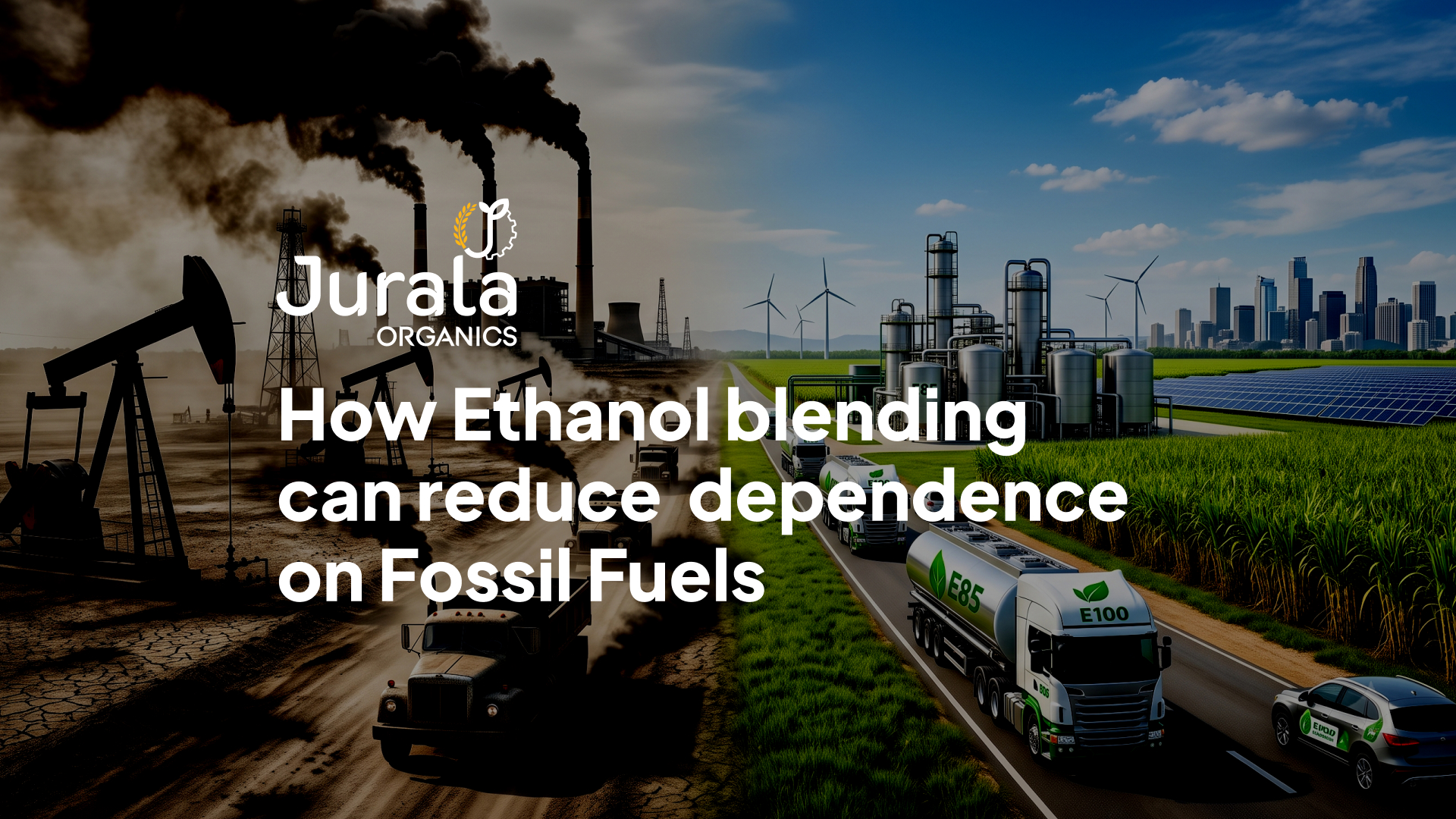
As global fuel prices remain volatile and energy security becomes a national priority, ethanol blending has emerged as one of India’s most practical tools to cut down on fossil fuel dependence. By mixing ethanol with petrol, India is steadily reducing its reliance on imported crude oil while supporting a more sustainable, homegrown energy ecosystem. Here’s how ethanol blending reduces fossil fuel dependence and why it matters now more than ever.
Ethanol blending is the process of mixing ethanol — a renewable biofuel produced from crops like sugarcane, maize, and grains — with petrol in specific proportions. India currently follows programmes like E10 (10% ethanol) and is rapidly scaling toward E20 fuel (20% ethanol blending) under the Ethanol Blended Petrol (EBP) Programme.
The ethanol used in this blend is largely produced through the ethanol production process — fermenting sugars from crops and distilling them into fuel-grade ethanol.
India achieved its E10 target ahead of schedule and is now aggressively rolling out E20 fuel across the country, with auto manufacturers producing E20-compatible and flex-fuel vehicles. As blending percentages rise, the cumulative effect on fossil fuel displacement compounds — every percentage point of ethanol blending translates into measurable reductions in crude oil imports.
Ethanol blending is one of the most actionable levers India has to reduce fossil fuel dependence — combining energy security, farmer income, cleaner emissions, and rural economic growth into a single policy push. As the country moves from E10 to E20 and continues investing in the full ethanol value chain, from production to byproducts like DDGS, the shift away from imported crude oil will only accelerate.
Q1. How does ethanol blending reduce fossil fuel dependence?
It directly replaces a portion of petrol with domestically produced ethanol, reducing the volume of crude oil India needs to import and refine.
Q2. What is the current ethanol blending target in India?
India achieved its E10 (10%) target ahead of schedule and is now scaling toward E20 (20% ethanol blending) nationwide.
Q3. Does ethanol blending affect vehicle performance?
Most modern BS6-compliant vehicles in India are E20-ready and run safely on ethanol-blended fuel without performance issues.
Q4. Where does the ethanol used in blending come from?
It’s produced from crops like sugarcane, maize, and broken rice through fermentation and distillation. Learn more about the ethanol production process.
Q5. What happens to the byproducts of ethanol production?
Grain-based ethanol production yields DDGS, a nutrient-rich cattle feed, giving the process an additional economic and agricultural benefit. Read about DDGS for cattle feed.
Q6. How much money can ethanol blending save India?
Higher blending rates are projected to save India billions of dollars annually in forex by reducing crude oil import volumes.
Q7. Is ethanol blending better for the environment?
Yes — ethanol-blended petrol burns cleaner, reducing carbon monoxide and particulate emissions compared to pure petrol.