Distillers Grain: High-Protein Livestock Feed for Better Nutrition

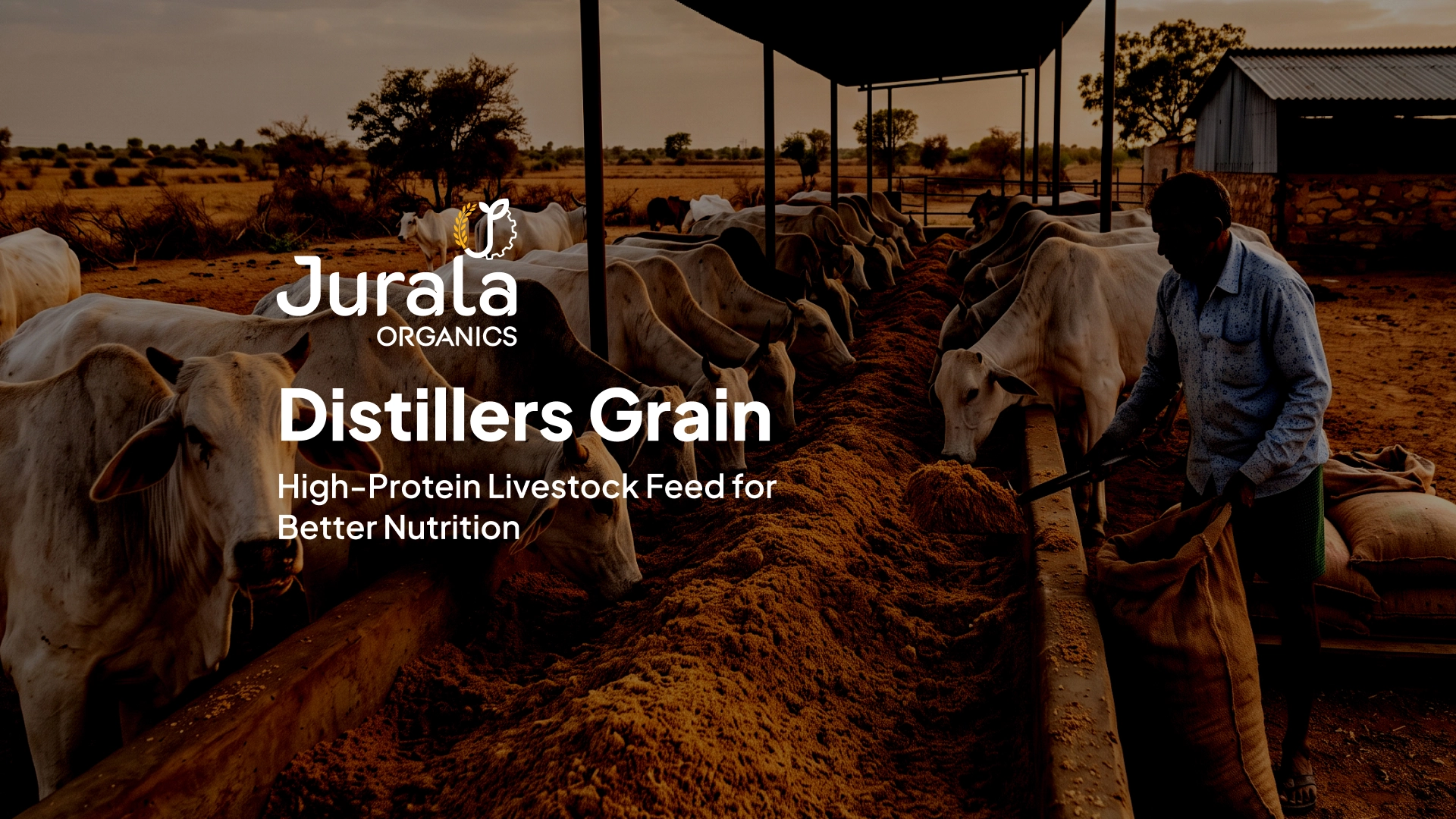
Distillers Grain: High-Protein Livestock Feed for Better Nutrition

The livestock industry depends heavily on high-quality feed to ensure healthy animal growth, productivity, and overall farm profitability. As feed costs continue to rise, farmers are increasingly seeking affordable and nutrient-rich alternatives that can support animal performance without compromising quality.

One such solution is Distillers Grain, a valuable feed ingredient known for its high protein content and nutritional benefits. Produced as a by-product of grain processing, it has become an important component of modern livestock diets. With its ability to support animal health while promoting resource efficiency, this feed ingredient is gaining popularity among farmers worldwide.

What is Distillers Grain?

Distillers Grain is a nutrient-rich feed ingredient obtained during the processing of grains for ethanol manufacturing. After the starch portion of the grain is utilized, the remaining components, including protein, fiber, fats, and minerals, become concentrated, creating a highly nutritious feed source.

A commonly used form is Distillers Dried Grains with Solubles (DDGS), which is widely incorporated into livestock diets due to its excellent nutritional profile. This feed ingredient serves as a practical solution for improving animal performance while reducing feed costs.

How Distillers’ Grain is Produced

The production process begins with the selection of quality grains such as maize and other starch-rich feedstocks.

Grain Processing

The grains are cleaned, prepared, and processed to extract starch, which is then converted into ethanol through fermentation.

Fermentation and Nutrient Concentration

During fermentation, starch is converted into alcohol. As this process occurs, valuable nutrients such as protein, fiber, and minerals become concentrated in the remaining material.

Drying and Storage

The remaining nutrient-rich material is dried to produce Distillers Grain, making it suitable for storage, transportation, and long-term use in livestock feeding programs.

Nutritional Value of Distillers Grain

One of the key reasons farmers choose Distillers Grain is its impressive nutritional composition.

High Protein Content

Protein plays a critical role in animal growth, muscle development, and overall health. This feed ingredient contains significantly higher protein levels than many conventional feed sources.

Essential Nutrients

In addition to protein, it provides:

  • Amino acids
  • Vitamins
  • Minerals
  • Beneficial fats

These nutrients contribute to balanced diets and improved livestock performance.

Energy-Rich Feed Source

The remaining fats and digestible nutrients provide an excellent source of energy, helping animals maintain productivity and healthy growth rates.

Fiber Benefits

Fiber supports digestive health and promotes efficient feed utilization, making it an important component of livestock nutrition.

Benefits for Livestock Farming

The growing popularity of Distillers Grain can be attributed to the numerous advantages it offers farmers and livestock producers.

Improved Animal Growth

The high protein content supports muscle development and healthy weight gain in various livestock species.

Better Feed Efficiency

Animals can utilize nutrients more effectively, leading to improved feed conversion and productivity.

Cost-Effective Nutrition

As a by-product of grain processing, it offers an economical alternative to many traditional protein sources.

Consistent Quality

Modern production facilities maintain strict quality standards, ensuring reliable nutritional value for livestock operations.

Applications in Different Livestock Sectors

This nutrient-rich feed ingredient can be used across a wide range of livestock production systems.

Cattle Feed

Beef and dairy cattle benefit from the protein, energy, and fiber content provided by DDGS. It supports growth performance and milk production while helping reduce feeding costs.

Poultry Nutrition

Broilers and laying hens can utilize DDGS as part of balanced feed formulations, contributing to growth and production efficiency.

Sheep and Goat Farming

Small ruminants also benefit from its nutritional value, making it a versatile ingredient in livestock feeding programs.

Aquaculture Applications

In some cases, DDGS is incorporated into aquaculture feed formulations as a sustainable protein source.

Distillers Grain and Sustainable Farming

Modern agriculture increasingly focuses on sustainability and resource optimization. Distillers Grain supports these goals by creating value from materials that might otherwise be underutilized.

Resource Efficiency

The production process ensures that valuable nutrients remain available for animal feeding rather than being discarded.

Waste Reduction

Using DDGS in livestock diets helps maximize the utilization of agricultural resources and supports responsible production practices.

Environmental Benefits

Efficient use of by-products contributes to reduced waste generation and promotes more sustainable farming systems.

Supporting Circular Agriculture

The integration of grain processing and livestock nutrition creates a more efficient agricultural ecosystem that benefits both producers and the environment.

Why Farmers Prefer DDGS

Farmers across the world are adopting DDGS because it offers a combination of nutritional, economic, and sustainability advantages.

Some key reasons include:

  • High protein levels
  • Reliable nutrient content
  • Lower feed costs
  • Improved animal performance
  • Greater resource efficiency

These benefits make it an attractive option for modern livestock operations seeking long-term profitability and sustainability.

Why Choose Jurala’s Feed Solutions?

Jurala is committed to delivering high-quality feed ingredients that support livestock health and agricultural growth.

Key advantages include:

  • Consistent nutritional quality
  • Advanced production standards
  • Reliable supply chain
  • Sustainable manufacturing practices
  • Commitment to customer satisfaction

By maintaining strict quality controls and efficient operations, Jurala helps livestock producers achieve better results through dependable feed solutions.

Future of Distillers Grain in Modern Agriculture

The future of Distillers Grain looks promising as demand for sustainable and cost-effective livestock feed continues to grow. Rising awareness of animal nutrition, increasing feed costs, and the expansion of grain-processing industries are driving greater adoption across agricultural sectors.

Advancements in feed technology and livestock management practices are expected to further increase the use of DDGS in animal diets. As the agricultural industry continues to focus on sustainability, this nutrient-rich ingredient will remain an important part of modern livestock feeding strategies.

Conclusion

Distillers Grain has become an essential component of modern livestock nutrition due to its high protein content, nutritional value, and cost-effectiveness. By supporting animal growth, improving feed efficiency, and contributing to sustainable farming practices, it offers significant benefits for farmers and producers.

As agriculture continues to evolve, the demand for efficient and environmentally responsible feed solutions is expected to increase. With its proven advantages and growing adoption across multiple livestock sectors, Distillers Grain will continue to play a vital role in supporting animal health, farm productivity, and sustainable agricultural development.

DDGS vs Traditional Protein Sources: A Cost-Benefit Guide for Indian Dairy Farmers

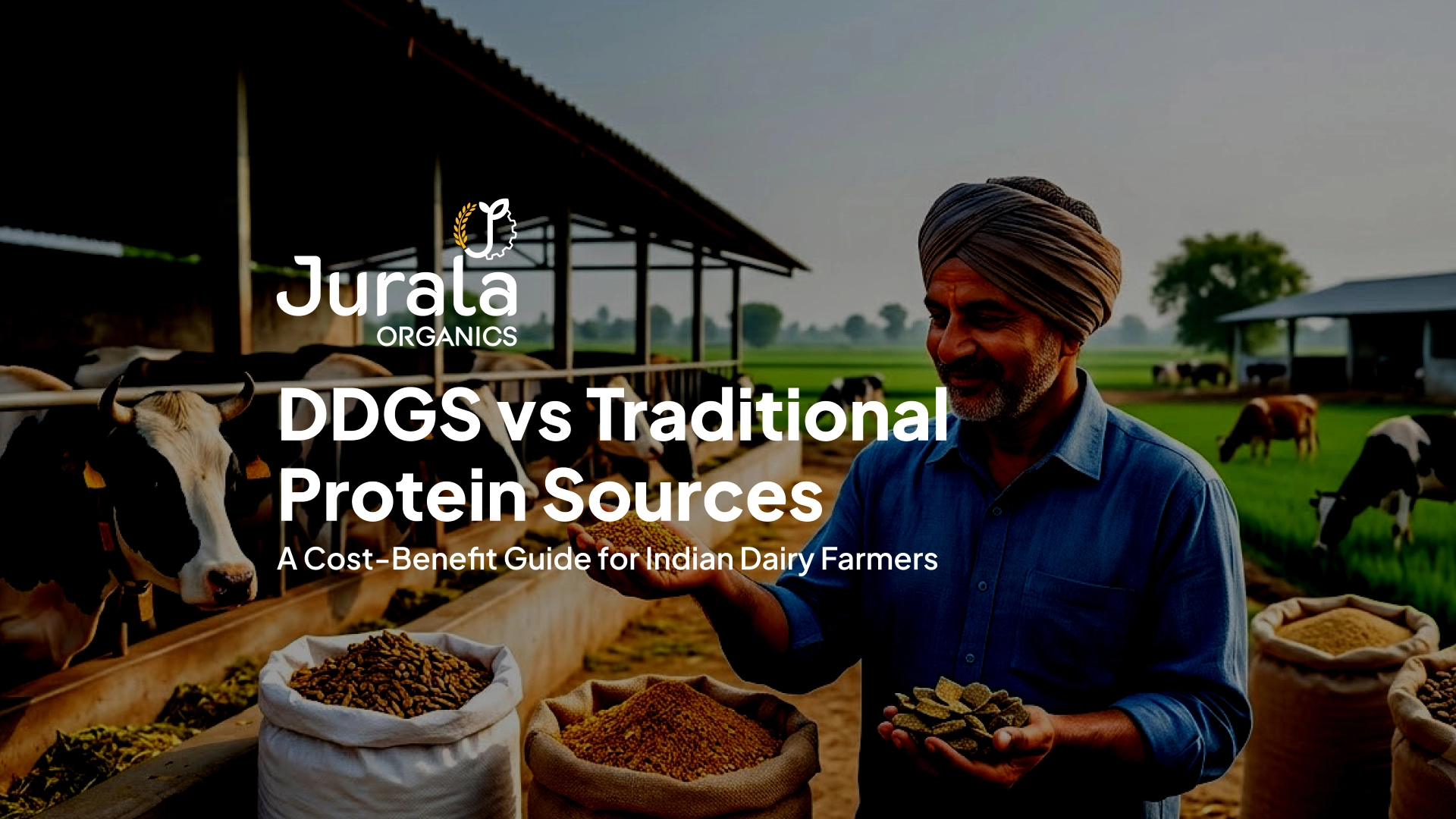
DDGS vs Traditional Protein Sources: A Cost-Benefit Guide for Indian Dairy Farmers

Feed costs typically account for the largest share of expenses in dairy and poultry operations, which makes ingredient selection one of the most important decisions a farmer or feed manufacturer can make. Soybean meal has long been the default protein source across India, but Dried Distillers Grains with Solubles (DDGS) is increasingly being considered as a viable, cost-effective alternative. Here’s how the two compare, and how farmers can make an informed decision between them.

Understanding the Two Ingredients

Soybean meal is produced by extracting oil from soybeans and processing the remaining solids into a protein-rich meal. It has long been considered a gold standard for protein quality in animal feed due to its favorable amino acid profile, particularly for poultry.

DDGS, by contrast, is a co-product of ethanol production. After grain — whether maize, broken rice, or other starch-based feedstock — is fermented and distilled to produce ethanol, the remaining solids are dried and processed into a protein- and fiber-rich feed ingredient. The two products come from entirely different industrial processes, but both have found a place in modern animal nutrition.

Protein Content: Close, But Not Identical

Soybean meal generally offers a higher crude protein percentage than DDGS, often in the 44–48% range compared to DDGS’s typical 25–30%. However, this comparison alone doesn’t tell the full story. DDGS brings additional fat and fiber content that soybean meal lacks, meaning that on a total energy and nutrient basis, the two ingredients often complement each other rather than directly compete — many balanced feed formulations use both in combination, leveraging soybean meal’s protein density alongside DDGS’s fiber and energy contribution.

Nutritionists formulating rations typically look beyond a single metric like crude protein percentage, instead balancing the full nutrient profile — protein, energy, fiber, and minerals — across all ingredients in a ration to hit target performance outcomes for the specific animal class being fed.

Cost Considerations

International markets heavily influence soybean meal prices in India, since a significant portion of the country’s soybean and soymeal supply is tied to import dynamics and global commodity price swings. This exposes dairy and poultry farmers to price volatility outside their control — a currency fluctuation or a poor harvest in a major exporting country can ripple through to feed costs on an Indian farm within weeks.

DDGS, by contrast, is a domestically produced co-product of the ethanol industry. As grain-based ethanol production scales up under India’s Ethanol Blending Programme, DDGS availability is increasing in tandem — creating a more locally anchored, and often more price-stable, feed ingredient option. Because DDGS pricing is tied more closely to domestic grain markets and ethanol production economics rather than international soybean futures, it can offer a degree of insulation from the kind of import-driven price shocks that periodically affect soybean meal costs.

Supply Chain Stability

Because DDGS is generated continuously as a co-product of ethanol production rather than harvested seasonally, supply tends to be steady throughout the year. This is a meaningful advantage for large dairy operations and feed manufacturers who need predictable, uninterrupted ingredient flow to maintain consistent feed formulations without having to constantly reformulate around ingredient availability.

Soybean, on the other hand, is subject to seasonal harvest cycles and can see availability tighten during certain periods of the year, sometimes driving short-term price spikes. Feed manufacturers relying heavily on soybean meal often need to build in inventory buffers or hedge against seasonal price variability — an added layer of complexity that a steadier DDGS supply can help reduce.

Digestibility and Animal Response

Both ingredients are well established in animal nutrition science, but their performance varies by species and life stage:

Dairy Cattle: DDGS is widely used as a partial protein and energy supplement, particularly valued for its fiber content, which supports rumen health and helps maintain proper digestive function in high-producing dairy animals.

Poultry: Soybean meal remains the primary protein source due to its amino acid profile, particularly its lysine content, though DDGS can be included at moderate inclusion rates to reduce overall feed costs without significantly affecting bird performance.

Aquaculture: Both ingredients see use depending on species-specific nutritional requirements and formulation goals, with inclusion rates often determined through trial-based optimization for each species.

Making the Switch: What to Consider

Farmers and feed manufacturers considering a shift toward greater DDGS inclusion should keep a few factors in mind:

Inclusion Rates: DDGS is nutrient-dense, and inclusion levels should be calibrated to the specific animal class to avoid mineral imbalances, particularly around phosphorus and sulfur, which are naturally concentrated in the co-product.

Sourcing Consistency: Protein and moisture content can vary between suppliers, so working with a producer using standardized, energy-efficient drying processes helps maintain batch-to-batch consistency — an important factor when formulating precise rations at scale.

Blended Formulations: Many nutritionists recommend combining DDGS with soybean meal or other protein sources rather than fully replacing one with the other, optimizing both cost and nutritional balance across the full ration.

Animal-Specific Tolerance: Different animal classes have different optimal inclusion ranges. Working with a qualified animal nutritionist to determine the right formulation for a specific herd or flock helps ensure the cost savings from DDGS don’t come at the expense of animal performance.

Real-World Economics

For a mid-sized dairy operation formulating rations for a herd of several hundred animals, even modest reductions in per-kilogram feed cost can translate into meaningful annual savings once scaled across daily feeding volumes. Because DDGS often comes at a lower per-unit cost than soybean meal while still contributing meaningfully to the protein and energy needs of the ration, many operations find that partial substitution — rather than full replacement — delivers the best balance of cost savings and nutritional performance.

Conclusion:

DDGS isn’t necessarily a wholesale replacement for soybean meal, but it offers a compelling, domestically produced complement that can meaningfully reduce feed costs while maintaining strong nutritional outcomes. As India’s ethanol industry continues to expand, DDGS availability is likely to grow alongside it — giving dairy and poultry producers an increasingly accessible tool for building more cost-efficient, locally sourced feed rations that are less exposed to the volatility of global commodity markets.

Best DDGS Manufacturer in India | Premium Quality DDGS Supplier & Exporter

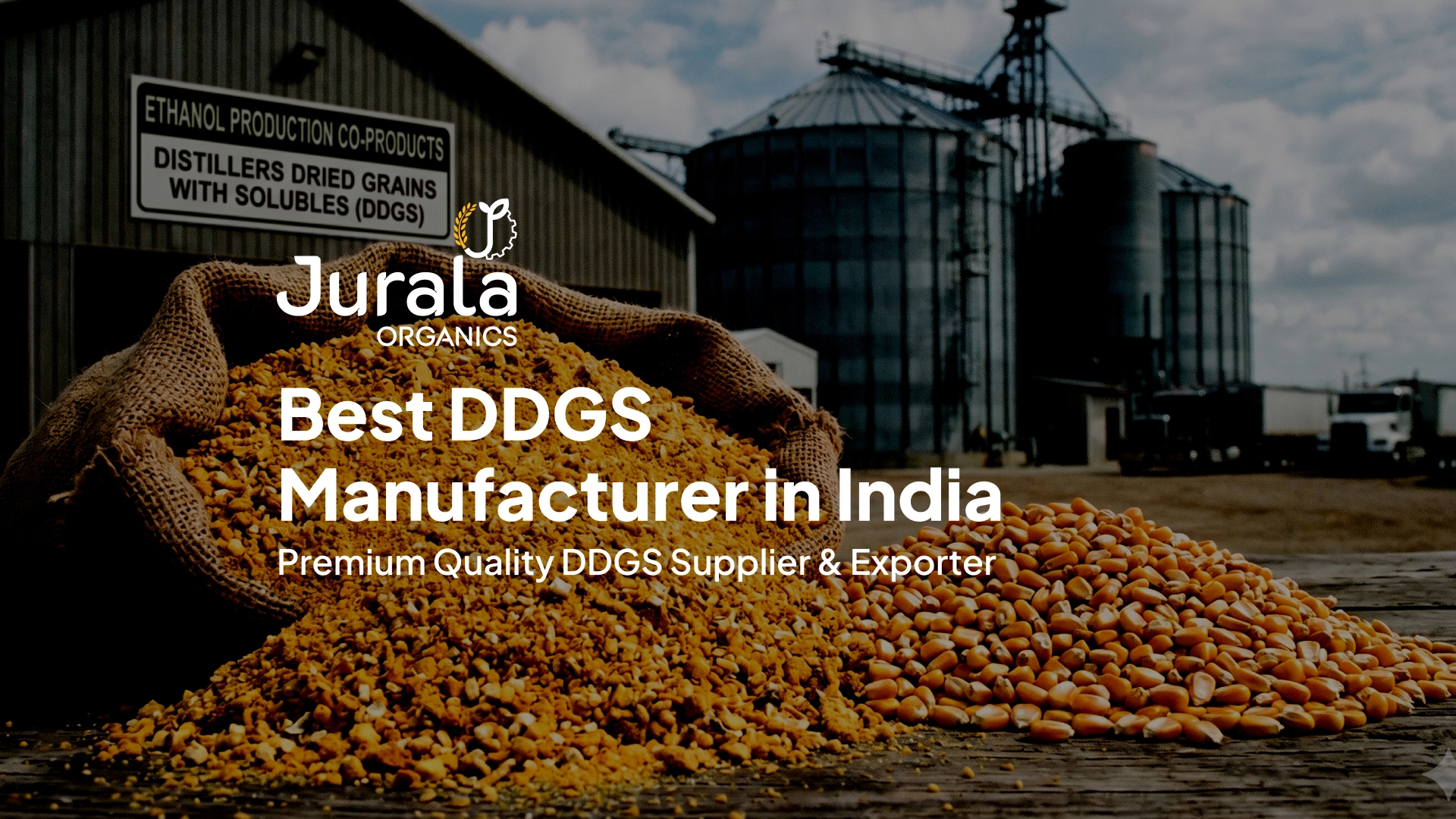
Best DDGS Manufacturer in India | Premium Quality DDGS Supplier & Exporter

Jurala is a trusted DDGS manufacturer in India supplying premium Rice DDGS for poultry feed, cattle feed, and livestock nutrition with reliable quality and bulk supply.

The Indian animal feed industry is growing rapidly as poultry farms, dairy businesses, and livestock owners look for nutritious and affordable feed ingredients. Among the most preferred solutions in the market today, DDGS has become an important part of modern feed formulations because of its rich nutritional value and cost-effectiveness.

Selecting the Best DDGS manufacturer in India is essential for businesses that want consistent quality, reliable supply, and better animal performance. Premium-quality feed ingredients help improve productivity, support healthy growth, and reduce overall feed costs for farmers and feed manufacturers.

Jurala has established itself as a trusted Rice DDGS supplier India by delivering high-quality nutritional feed solutions produced through advanced processing technology. With a strong focus on quality standards and customer satisfaction, the company supports poultry farms, dairy farms, and livestock feed manufacturers across India.

Understanding This Nutritional Feed Ingredient

Distillers Dried Grains with Solubles is a valuable co-product generated during the ethanol manufacturing process. This nutrient-rich material contains protein, fiber, energy, vitamins, and minerals that are beneficial for animal nutrition.

Produced through advanced processing methods, rice-based feed ingredients from ethanol production are widely used in poultry, cattle, and livestock nutrition because they offer balanced nutritional support at an economical price. As an ethanol by-product feed ingredient, it has become an increasingly popular choice for commercial feed manufacturers.

The growing demand for sustainable agriculture has also increased the importance of using efficient and environmentally responsible feed ingredients in the livestock sector.

Importance in Poultry Nutrition

Modern poultry farming requires balanced nutrition to improve bird growth, feed efficiency, and overall health. DDGS for poultry feed is widely used because it provides essential nutrients that support healthy poultry development.

Benefits for poultry farming include:

  • Better feed conversion efficiency
  • Improved growth performance
  • Enhanced protein intake
  • Healthy digestion support
  • Reduced feed formulation costs

Feed manufacturers prefer rice-based nutritional ingredients because they blend effectively with poultry feed formulations and maintain consistent quality standards.

Benefits for Dairy and Cattle Farming

The dairy sector also depends on high-quality feed ingredients to maintain animal health and milk productivity. DDGS for cattle feed supports better digestion, nutrient absorption, and energy balance in dairy animals.

Key advantages for cattle nutrition include:

  • Improved milk production
  • Better digestive performance
  • Enhanced energy supply
  • Affordable nutrition management
  • Improved feed palatability

As dairy farming continues to expand across India, farmers are increasingly adopting cost-effective protein sources that help improve productivity while maintaining nutritional consistency.

Why Rice-Based Feed Ingredients Are Preferred

Rice-derived feed ingredients have become highly popular in the Indian market because of their nutritional value and affordability. Businesses involved in feed production prefer these ingredients for several reasons.

Rich Protein Content

Protein is one of the most important components of animal nutrition. High-quality rice-based feed ingredients help support growth, muscle development, and overall animal performance.

Excellent Digestibility

Digestibility plays a major role in feed efficiency. Easily digestible ingredients help animals absorb nutrients more effectively, improving overall productivity.

Economical Feed Solution

Feed expenses account for a significant portion of livestock production costs. Using affordable nutritional ingredients helps farmers reduce operational expenses without compromising feed quality.

Sustainable Feed Option

As an environmentally responsible solution, this ingredient supports sustainable feed manufacturing practices by utilizing valuable nutrients generated during ethanol production.

Consistent Nutritional Quality

Reliable feed ingredients help manufacturers create balanced and dependable feed formulations for poultry, dairy animals, and livestock.

Why Jurala is a Trusted Manufacturer and Supplier

Finding a dependable feed ingredient supplier is important for maintaining quality and uninterrupted business operations. Jurala has built a strong reputation through quality manufacturing practices, efficient logistics, and customer-focused service.

As a leading DDGS manufacturer and supplier, the company delivers premium-quality products that meet the evolving demands of the Indian feed industry.

Advanced Production Standards

Modern processing technology helps preserve nutritional value while ensuring product consistency and safety. Every stage of production is monitored carefully to maintain superior quality standards.

Strict Quality Control

Consistent nutritional composition is essential in animal feed manufacturing. Jurala follows strict quality checks to ensure reliable product performance and safety.

Reliable Bulk Supply

Large-scale poultry farms and feed manufacturers require uninterrupted supply throughout the year. Strong production and distribution capabilities help ensure timely deliveries across multiple regions.

PAN India Distribution Network

The company serves customers across different states with dependable transportation and logistics support for bulk orders.

Customer-Centered Service

Long-term relationships are built through quality products, transparent communication, and dependable business support tailored to customer requirements.

Applications Across the Feed Industry

This nutritional ingredient is widely used in different segments of the feed sector because of its balanced nutritional profile and affordability.

Poultry Feed Manufacturing

Commercial poultry farms use this ingredient to support healthy bird growth and improve feed efficiency.

Dairy and Cattle Nutrition

Dairy farmers include it in feed formulations to improve nutritional intake and maintain productive cattle performance.

Livestock Feed Production

Goat, sheep, and livestock feed manufacturers also use protein-rich rice-derived ingredients to support healthy animal development.

Aquaculture Nutrition

Some aquaculture businesses use similar nutritional ingredients in fish feed formulations because of their protein and energy content.

Factors to Consider Before Choosing a Supplier

Businesses should evaluate several important factors before selecting a feed ingredient manufacturer.

Product Consistency

Nutritional consistency is essential for maintaining stable feed quality and animal performance.

Manufacturing Infrastructure

Advanced processing facilities help ensure better quality control and reliable production standards.

Supply Capacity

Bulk availability and uninterrupted delivery are important for feed manufacturers and commercial farms.

Logistics Support

Timely transportation and dependable delivery systems help businesses maintain smooth operations.

Industry Reputation

Working with experienced and reliable manufacturers ensures better service quality and long-term business support.

Growing Demand in the Indian Market

India’s poultry, dairy, and livestock industries are expanding rapidly, creating higher demand for affordable and nutritious feed ingredients. Farmers are becoming more aware of the importance of balanced nutrition in improving productivity and profitability.

At the same time, feed manufacturers are looking for sustainable alternatives that offer economic and nutritional advantages. These changing market trends continue to increase the demand for Rice DDGS for animal feed across India.

Among leading Rice DDGS manufacturers, Jurala continues to support the growing needs of feed businesses with quality-focused production and dependable supply solutions.

Conclusion

Nutrient-rich feed ingredients play an important role in improving animal health, productivity, and feed efficiency. Today, DDGS is widely recognized as a valuable solution for poultry farms, dairy farms, and livestock feed manufacturers because of its nutritional benefits and affordability.

Choosing the right supplier is essential for ensuring consistent quality, reliable delivery, and long-term business growth. Jurala DDGS has earned the trust of customers across India through premium manufacturing standards, dependable supply capabilities, and customer-focused service.

Whether you are searching for reliable feed solutions for poultry, dairy, or livestock nutrition, Jurala provides high-quality products designed to meet the evolving needs of the Indian feed industry.

Ethanol Production Process: From Grain to Green Fuel

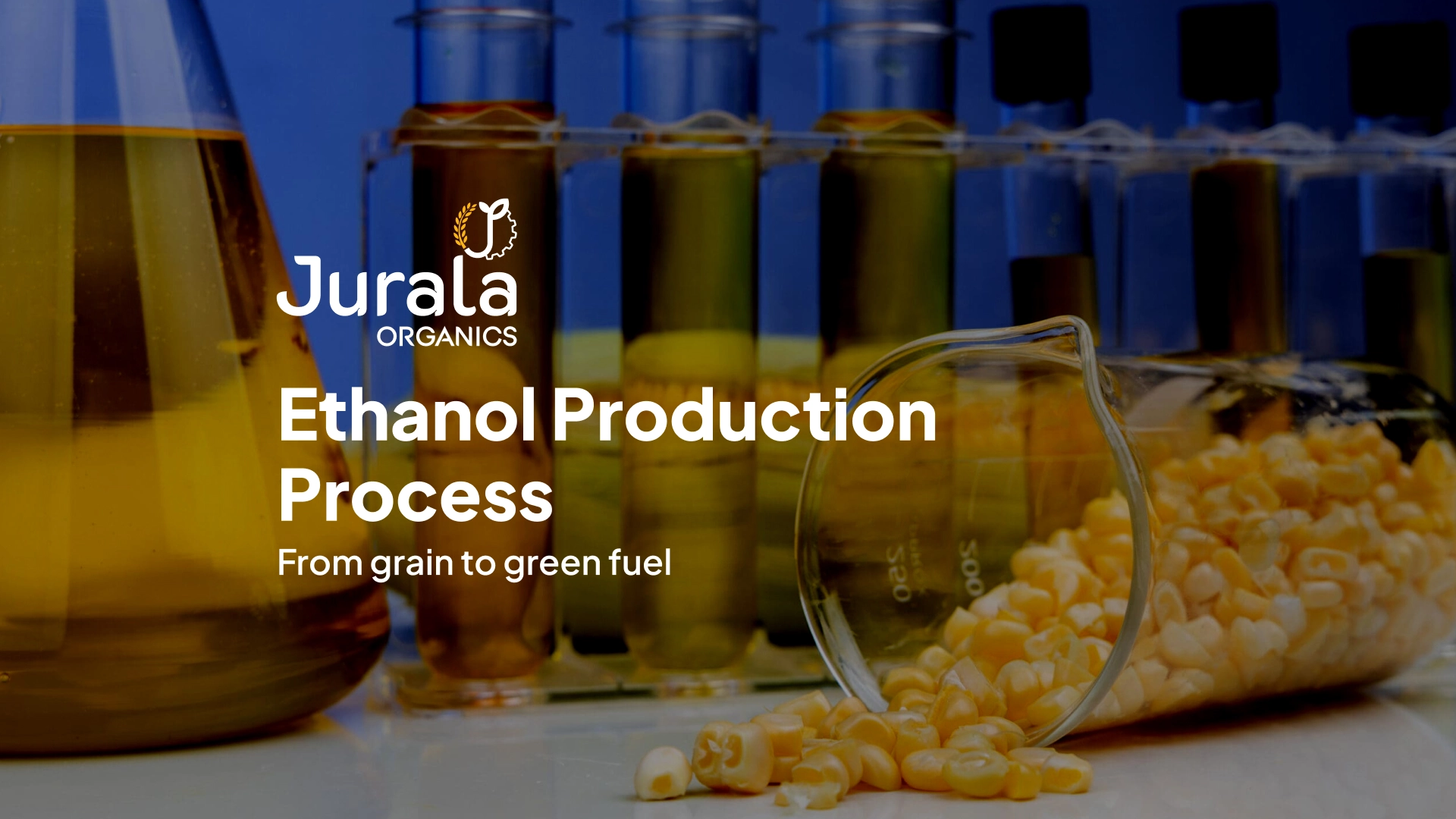
Ethanol Production Process: From Grain to Green Fuel

As the world moves toward cleaner and more sustainable energy sources, renewable biofuels have become an essential part of the global energy transition. Governments, industries, and consumers are increasingly looking for alternatives to fossil fuels that can reduce carbon emissions and support long-term environmental sustainability.

India is among the leading nations promoting biofuels through various energy initiatives and blending programs. Through advanced technologies and efficient resource utilization, Ethanol Production is helping create a cleaner future while supporting agricultural growth and energy security. Grain-based manufacturing facilities play a crucial role in converting agricultural feedstocks into high-quality renewable fuel that can be used across multiple industries.

What is Ethanol Production?

 Agricultural feedstocks such as maize, broken rice, and other starch-rich grains can be transformed into renewable fuel through a series of carefully controlled manufacturing stages. These stages include milling, fermentation, distillation, and dehydration, resulting in fuel-grade ethanol suitable for blending with conventional fuels and various industrial applications. 

As a renewable biofuel, ethanol helps reduce dependence on fossil fuels while supporting environmental sustainability. Its growing demand is driven by the need for cleaner transportation fuels, improved energy security, and reduced carbon emissions, making it an important component of modern renewable energy strategies. 

Why Ethanol Production Matters

The increasing focus on renewable energy has highlighted the importance of Ethanol Production in creating sustainable fuel alternatives. Unlike conventional fuels, ethanol is produced from renewable agricultural resources that can be replenished each year. 

Key benefits include: 

  • Reduced greenhouse gas emissions 
  • Improved energy security 
  • Support for agricultural communities 
  • Lower dependence on imported crude oil 
  • Promotion of sustainable economic growth 

These advantages make ethanol a valuable contributor to the global transition toward cleaner energy systems. 

Understanding the Ethanol Production Process

The Ethanol Production Process involves several carefully managed stages that convert grains into high-quality renewable fuel. 

1. Grain Selection and Procurement 

The first stage of Ethanol Production begins with sourcing high-quality agricultural feedstocks. Grains such as maize and broken rice are selected based on starch content, moisture levels, and overall quality. 

Using premium raw materials helps maximize efficiency and ensures consistent product quality throughout the manufacturing process. 

2. Milling and Preparation 

After procurement, the grains undergo cleaning and milling. During this stage, the feedstock is converted into a fine meal, increasing the surface area available for processing. 

This step improves starch accessibility and prepares the material for enzymatic conversion. 

3. Liquefaction and Saccharification 

The starch present in grains must be converted into fermentable sugars before alcohol formation can occur. 

Specialized enzymes are added to break down complex starch molecules into simple sugars. This conversion process is critical to achieving high yields and maintaining the efficiency of Ethanol Production. 

4. Fermentation 

Fermentation is one of the most important stages in the manufacturing journey. During this phase, yeast is introduced to the sugar-rich solution. 

The yeast converts sugars into alcohol and carbon dioxide under controlled conditions. Modern facilities optimize fermentation parameters to maximize efficiency and maintain the quality standards required for successful Ethanol Production. 

5. Distillation 

Following fermentation, the mixture contains alcohol, water, and residual solids. Distillation separates the alcohol from other components using controlled heating and condensation techniques. 

This process significantly increases purity levels and prepares the product for final refinement. 

6. Dehydration 

Even after distillation, small amounts of water remain. Advanced dehydration systems remove excess moisture to produce fuel-grade ethanol that meets industry specifications. 

The dehydration stage ensures that the final product is suitable for transportation and industrial applications. 

7. Storage and Distribution 

The final stage of Ethanol Production involves storage, testing, and distribution. Quality control procedures verify that the product meets required standards before it is supplied to oil marketing companies and industrial consumers. 

Efficient logistics systems help maintain product quality throughout the supply chain. 

Environmental Benefits of Ethanol Production

One of the primary reasons for the growing popularity of Ethanol Production is its positive environmental impact. 

Reduced Carbon Emissions 

Renewable fuels generate fewer greenhouse gas emissions compared to conventional fossil fuels, helping combat climate change and improve air quality. 

Cleaner Combustion 

Ethanol-blended fuels burn more efficiently, resulting in lower emissions of harmful pollutants. 

Renewable Resource Utilization 

Agricultural feedstocks used in Ethanol Production can be replenished annually, ensuring a sustainable and reliable supply of raw materials. 

Support for Circular Economy Practices 

Modern manufacturing facilities maximize resource efficiency by utilizing valuable by-products and minimizing waste generation. 

Grain-Based Ethanol and India's Renewable Energy Goals

Grain-Based Ethanol plays a significant role in supporting India’s renewable energy initiatives. Government blending programs aim to increase the use of biofuels and reduce dependence on imported petroleum products. 

Through increased Ethanol Production, India can: 

  • Strengthen energy security 
  • Reduce fuel import costs 
  • Support agricultural development 
  • Promote environmental sustainability 
  • Encourage rural economic growth 

As demand continues to rise, investment in modern biofuel infrastructure is expected to accelerate industry growth. 

Valuable By-Products from Biofuel Manufacturing

Modern Biofuel Manufacturing facilities generate several useful by-products that contribute to resource optimization and sustainability. 

Distillers Dried Grains with Solubles (DDGS) 

DDGS is a protein-rich animal feed ingredient widely used in the livestock sector. 

Benefits include: 

  • Improved animal nutrition 
  • Cost-effective feed solutions 
  • Efficient resource utilization 

Carbon Dioxide Recovery 

Carbon dioxide generated during fermentation can be captured and utilized in industries such as:

  • Beverage manufacturing 
  • Food processing 
  • Industrial production 

This helps improve the overall sustainability of Ethanol Production facilities. 

Why Choose Jurala for Sustainable Fuel Solutions?

Jurala is committed to delivering high-quality Sustainable Fuel Solutions through advanced manufacturing practices and innovative technologies. 

Key strengths include: 

  • Advanced grain-processing technologies 
  • Strong commitment to environmental responsibility 
  • Efficient operational systems 
  • High-quality production standards 
  • Focus on long-term sustainability 

By investing in innovation and responsible manufacturing, Jurala continues to support the growth of Ethanol Production while contributing to India’s clean energy future. 

Future of Ethanol Production in India

Rising energy demand, supportive government policies, and increased environmental awareness are creating new opportunities for industry growth. 

Several factors will drive future expansion: 

  • Increased fuel blending targets 
  • Technological advancements 
  • Infrastructure development
  • Growing renewable energy investments 
  • Stronger sustainability initiatives 

As India advances toward a greener economy, Ethanol Production will remain a key contributor to sustainable development and energy independence. 

Conclusion

The journey from grain to green fuel demonstrates the remarkable potential of renewable energy technologies. Through advanced processing methods, agricultural resources are transformed into valuable fuel that supports economic growth, environmental sustainability, and energy security. 

As industries and governments continue to prioritize cleaner energy alternatives, the importance of Ethanol Production will continue to grow. Through innovation, efficiency, and responsible manufacturing practices, companies like Jurala are helping build a cleaner, greener, and more sustainable future for generations to come. 

Compare